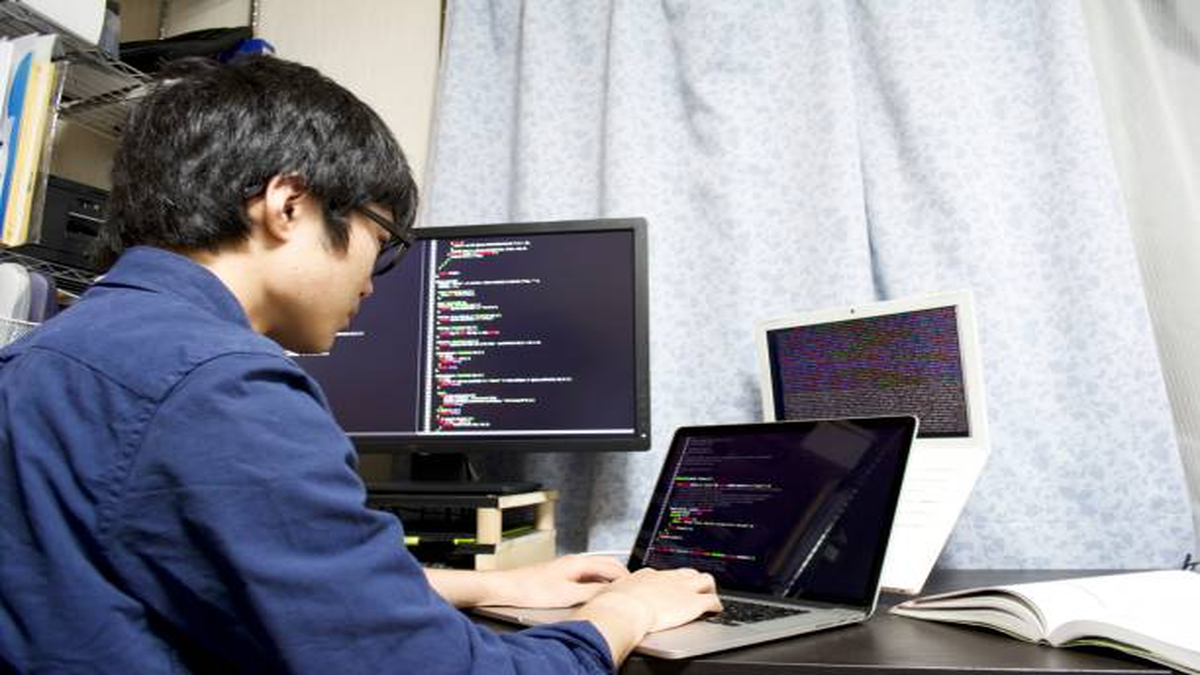

The concept of a Smartness Lab represents a modern response to the growing need for intelligent problem-solving, interdisciplinary learning, and practical innovation in a rapidly evolving world. A Smartness Lab is not simply a physical room or a digital platform; it is a structured environment designed to cultivate smart thinking, adaptive skills, analytical reasoning, creativity, and real-world application of knowledge. It brings together learning, experimentation, technology, and human-centered design to help individuals and organizations become more effective, efficient, and forward-thinking.
In an era where information is abundant but deep understanding is rare, Smartness Labs aim to bridge the gap between knowing and applying. They focus on developing cognitive flexibility, decision-making abilities, and strategic thinking rather than rote memorization. Whether used in education, corporate training, research, or personal development, Smartness Labs emphasize learning by doing, reflection, collaboration, and continuous improvement.
This article explores the Smartness Lab concept in depth, explaining its purpose, structure, principles, applications, benefits, challenges, and future relevance. The goal is to provide a clear, detailed, and practical understanding of how Smartness Labs function and why they are becoming increasingly important across sectors.
Understanding the Concept of a Smartness Lab
A Smartness Lab is a dedicated ecosystem designed to nurture intelligent behavior rather than just intelligence as a static trait. Intelligence traditionally focuses on cognitive ability, but smartness involves the effective use of knowledge, judgment, creativity, and emotional awareness in real situations. A Smartness Lab therefore prioritizes applied intelligence.
Unlike traditional classrooms or training centers, a Smartness Lab encourages exploration, experimentation, and failure as part of the learning process. Participants are guided to ask better questions, analyze problems from multiple perspectives, and design solutions that are both practical and ethical. The lab environment supports structured thinking while remaining flexible enough to adapt to different learning goals.
Smartness Labs can exist in physical spaces equipped with tools, digital technologies, and collaborative areas, or as virtual platforms that simulate real-world challenges. In many cases, they combine both physical and digital elements to create a blended learning experience.
Core Objectives of a Smartness Lab
The primary objective of a Smartness Lab is to enhance smart decision-making and problem-solving capabilities. It focuses on equipping individuals with skills that remain relevant despite rapid technological and social changes. These skills include critical thinking, systems thinking, adaptability, collaboration, and ethical reasoning.
Another objective is to close the gap between theory and practice. Smartness Labs help participants translate abstract ideas into actionable strategies. This is particularly valuable in professional environments where employees must make decisions under uncertainty and constraints.
Smartness Labs also aim to foster innovation. By creating a safe environment for experimentation, they encourage participants to test ideas, learn from failure, and refine solutions. This mindset supports long-term growth and resilience.
Key Components of a Smartness Lab
A Smartness Lab is built on several interconnected components that work together to support intelligent learning and application. One of the most important components is the learning framework. This framework defines the goals, methods, and evaluation criteria of the lab. It ensures that activities are aligned with the development of smart thinking rather than superficial knowledge acquisition.
Another key component is the problem-based approach. Smartness Labs typically revolve around real or realistic challenges. These challenges are complex, open-ended, and require interdisciplinary thinking. Participants must gather information, analyze constraints, and propose viable solutions.
Technology often plays a supporting role in Smartness Labs. Tools such as data analysis software, simulation platforms, collaborative dashboards, and digital prototyping tools help participants explore scenarios and test ideas. However, technology is not the focus; it is a means to enhance thinking, not replace it.
Human interaction is equally important. Smartness Labs emphasize collaboration, discussion, and peer learning. Facilitators guide the process, ask probing questions, and help participants reflect on their thinking patterns and decisions.
Smartness Lab vs Traditional Learning Models
Traditional learning models often emphasize content delivery and standardized assessment. In contrast, Smartness Labs focus on process, reasoning, and application. The difference lies not only in what is taught, but in how learning is approached.
In a traditional model, learners are often passive recipients of information. In a Smartness Lab, learners are active participants who construct knowledge through experience. They are encouraged to question assumptions, challenge ideas, and explore alternatives.
Assessment in Smartness Labs is also different. Instead of relying solely on exams or quizzes, evaluation is based on problem-solving approaches, decision quality, collaboration, reflection, and adaptability. This aligns more closely with real-world performance.
Types of Smartness Labs
Smartness Labs can take various forms depending on their purpose and audience. Educational Smartness Labs are designed for students at different levels. They help learners develop critical thinking, creativity, and practical skills alongside academic knowledge. These labs often integrate subjects such as science, technology, social studies, and ethics into unified projects.
Corporate Smartness Labs focus on professional development and organizational growth. They are used to train employees in strategic thinking, leadership, innovation, and change management. These labs often simulate business scenarios, market challenges, or operational problems.
Research-oriented Smartness Labs support interdisciplinary inquiry and innovation. They bring together experts from different fields to explore complex problems that cannot be solved within a single discipline. These labs emphasize experimentation, data analysis, and iterative learning.
Personal development Smartness Labs are designed for individuals seeking to improve decision-making, productivity, and life skills. They focus on self-awareness, goal setting, problem-solving, and adaptive thinking.
Skills Developed in a Smartness Lab
Smartness Labs are designed to develop a wide range of skills that are essential for modern life and work. Critical thinking is a core skill, as participants learn to evaluate information, identify biases, and assess the validity of arguments.
Problem-solving skills are developed through repeated exposure to complex challenges. Participants learn to define problems clearly, generate multiple solutions, and evaluate outcomes. This process builds confidence and competence in handling uncertainty.
Communication and collaboration skills are also emphasized. Participants must articulate ideas clearly, listen to others, and work effectively in teams. These skills are crucial in both professional and social contexts.
Emotional intelligence is another important area. Smartness Labs often include reflection and feedback components that help participants understand their emotions, manage stress, and empathize with others. This supports better decision-making and leadership.
Smartness Lab Structure and Workflow
A typical Smartness Lab follows a structured yet flexible workflow. It often begins with problem framing, where participants are introduced to a challenge and guided to understand its context, constraints, and objectives. This stage emphasizes clarity and shared understanding.
The next stage involves exploration and research. Participants gather relevant information, analyze data, and explore different perspectives. Facilitators encourage questioning and critical analysis during this phase.
Ideation and solution design follow. Participants generate ideas, build models or prototypes, and test assumptions. Feedback loops are integrated to help refine solutions.
The final stage focuses on reflection and learning integration. Participants review their decisions, outcomes, and thought processes. This reflection helps consolidate learning and identify areas for improvement.
Role of Facilitators in a Smartness Lab
Facilitators play a crucial role in the success of a Smartness Lab. Unlike traditional instructors, facilitators do not simply deliver content. They guide the learning process, create a supportive environment, and encourage deep thinking.
Facilitators ask open-ended questions, challenge assumptions, and help participants connect ideas. They also manage group dynamics, ensuring that all voices are heard and respected.
Effective facilitators are skilled in observation and feedback. They help participants become aware of their thinking patterns and behaviors, supporting personal and collective growth.
Benefits of Implementing a Smartness Lab
Smartness Labs offer numerous benefits for individuals and organizations. One of the most significant benefits is improved decision-making. Participants learn to approach problems systematically and thoughtfully, reducing impulsive or poorly informed choices.
Innovation is another key benefit. By encouraging experimentation and creative thinking, Smartness Labs help generate new ideas and solutions. This is particularly valuable in competitive and rapidly changing environments.
Smartness Labs also enhance adaptability. Participants become more comfortable with uncertainty and change, developing the resilience needed to navigate complex situations.
For organizations, Smartness Labs support talent development and retention. Employees who feel challenged, supported, and valued are more likely to stay engaged and committed.
Challenges in Building and Running a Smartness Lab
Despite their benefits, Smartness Labs are not without challenges. One common challenge is resistance to change. Participants accustomed to traditional learning or management styles may initially struggle with the open-ended nature of Smartness Labs.
Another challenge is resource allocation. Setting up a Smartness Lab requires time, skilled facilitators, and appropriate tools. Organizations must be willing to invest in long-term development rather than expecting immediate results.
Measuring outcomes can also be complex. The benefits of smart thinking and improved decision-making may not be immediately visible or easily quantified. This requires a shift in evaluation mindset.
Smartness Lab Applications Across Sectors
Smartness Labs are increasingly being applied across various sectors. In education, they support project-based learning and interdisciplinary curricula. Students learn how to apply knowledge to real-world problems, preparing them for future careers.
In business, Smartness Labs are used for leadership development, innovation workshops, and strategic planning. They help organizations respond to market changes and improve internal processes.
In public sector and social development, Smartness Labs support policy design, community problem-solving, and service innovation. They encourage inclusive thinking and evidence-based decision-making.
Healthcare, technology, and environmental sectors also benefit from Smartness Labs, particularly when dealing with complex systems and ethical considerations.
Smartness Lab Tools and Methods
Smartness Labs use a variety of tools and methods to support learning and problem-solving. These include brainstorming frameworks, decision matrices, scenario planning, and systems mapping. Such tools help structure thinking and make complex problems more manageable.
Digital tools may include data visualization platforms, simulation software, and collaborative workspaces. These tools enhance analysis and communication but are always secondary to human judgment and reasoning.
Reflection tools such as journals, feedback sessions, and self-assessment frameworks help participants internalize learning and improve over time.
Example Smartness Lab Skill Mapping Table
| Skill Area | Focus Description | Practical Outcome |
|---|---|---|
| Critical Thinking | Analyzing information and assumptions | Better judgment and reasoning |
| Problem Solving | Structuring and resolving challenges | Effective solutions |
| Collaboration | Working in diverse teams | Improved teamwork |
| Adaptability | Responding to change and uncertainty | Resilience |
| Communication | Expressing and interpreting ideas | Clear understanding |
Measuring Success in a Smartness Lab
Success in a Smartness Lab is measured through both qualitative and quantitative indicators. These may include improved decision quality, increased innovation output, enhanced collaboration, and participant feedback.
Long-term indicators such as career progression, organizational performance, or social impact can also reflect the effectiveness of Smartness Labs. Regular review and adaptation help ensure continuous improvement.
Future of Smartness Labs
As complexity and uncertainty continue to shape the modern world, the relevance of Smartness Labs is expected to grow. Advances in technology will enhance simulation and analysis capabilities, while human-centered design will remain central.
Future Smartness Labs are likely to be more personalized, data-informed, and globally connected. They will support lifelong learning and continuous adaptation, helping individuals and organizations thrive in changing environments.
Conclusion
A Smartness Lab is a powerful framework for developing intelligent, adaptable, and ethical thinkers. By focusing on applied knowledge, collaboration, and reflection, Smartness Labs prepare individuals to navigate real-world challenges effectively. Whether in education, business, or personal development, they offer a structured yet flexible approach to learning that goes beyond traditional models. As the demand for smart decision-making grows, Smartness Labs will play an increasingly important role in shaping capable and resilient individuals and organizations.
Click Here For More Blog Posts!
Frequently Asked Questions
What is a Smartness Lab?
A Smartness Lab is a learning and innovation environment designed to develop applied thinking, problem-solving, and smart decision-making skills.
How is a Smartness Lab different from a classroom?
A Smartness Lab focuses on real-world challenges, active participation, and reflection rather than passive content delivery.
Who can benefit from a Smartness Lab?
Students, professionals, organizations, researchers, and individuals seeking better decision-making and adaptive skills can benefit.
Do Smartness Labs require advanced technology?
Technology can support Smartness Labs, but the core focus is on human thinking, collaboration, and problem-solving.
Are Smartness Labs suitable for long-term learning?
Yes, Smartness Labs support continuous learning, adaptability, and skill development over time.